“Less than two years after my Dad had died I read an article in CBC (Canadian Broadcasting Company) about Chris Zuger training ChatGPT to respond as his deceased father when his grief “was too much to bear.” I was horrified. A similar 2024 article in the Guardian references Taiwanese musician Bao Xiaobai using Artificial Intelligence to “resurrect” his daughter after she had passed away from a rare blood disease to help cope with his grief. My horror continued. I could imagine all sorts of ways in which this would go awry and complicate the process of grief, rather than aid it. That horror, mixed with a joke my Dad made when he was still alive about how one day technology would keep him alive so he could always be with me and look out for me, was the genesis for how AI is used in our show. 2021 uses a small, locally run language model to explore what we do with data after a loved one dies. 2021 asks what I believe to be vital questions: What do we do with the data after a loved one dies? Do we keep the data? Is some of the data not worth keeping? Who makes that decision? What happens when harmful data is absorbed by other systems, replicated, or even reproduced beyond our control? And, in a nuanced manner, we compare data to the photographs, objects, and social media posts our loved ones leave behind, alongside the stories and memories we share about our loved ones to ask: Can a data set truly become a digital resurrection of our loved one? And—whether or not such a digital resurrection is possible—is that what we truly want?
We first began building our show, 2021, in 2023. The act of building the small language model (small LLM) began to teach our team what AI is (and currently isn’t) capable of when the tools to build a model are in our hands. It was an extraordinarily challenging process to build the small LLM, not in the least because we are artists who knew nothing of AI, and we relied on youtube tutorials, discord channels, peer-reviewed articles, and colleagues like David Rokeby at the BMO Lab at University of Toronto for support. It is important to preface that we wanted to approach the process as ethically as possible. We had, and continue to have significant questions and concerns about the policies surrounding AI and how AI is being employed. For the purposes of our show, we began by building a small dataset of our own. I wrote 1500 conversation threads between my Dad and I. These were based on his public data, my memories, and some conversations I wish we had. The following are key ethical questions I considered when building the dataset:
- I wanted the dataset to be something I wrote so that I was responsible for it.
- I wanted to ensure I didn’t use anything in the dataset that I didn’t have permission for. (Any facts about my Dad are public-facing data)
- I wanted to ensure it didn’t include private information about my Dad, my family, or myself.
- I didn’t want to include anything about my Dad that I wouldn’t write for an ethnographic solo show without the use of AI.
- I wanted our model to help teach people about how models are trained, make bias explicit, and raise questions about whether this is technology we want and/or are the parameters governing the technology sufficient (I don’t believe they are).
These principles don’t erase the ethical questions I have about Artificial Intelligence. They do, however, establish some boundaries for me in which I felt more comfortable exploring what I believe to be necessary questions asked of the technology at this time.
To build our small LLM for a local device, we used a SmolLM3 model and fine-tuned it with LoRA. We then selected an epoch from the fine-tuned set and currently run it locally using LM Studio. LoRA requires a lot less compute and energy than training from scratch. Once we had our model, we experimented with hundreds of system prompts to further refine the “character” of “my Dad” in the chatbot. We played around with the temperature of the model to help develop the sense of a “personality” and restricted token use for both environmental and artistic concerns. We also used Retrieval Augmented Generation (RAG) to help ground the small LLM on what data it was retrieving, enrich the “personality” of the model, and aid us in our search for token restriction. We run our model locally to ensure my dataset isn’t being mixed or used to train larger models. Running our model locally also allows us to customize our model without massive infrastructure. Furthermore, our model is on a local device so that any questions asked of it each evening are erased before the next show. No additional data is saved. Building our own small LLM gave us much more control to ethically (as best as we could with our means and knowledge) approach the questions we had about AI from a position of being inside the technology. We hope that gaining technical understanding has allowed us to more accurately critique this complex system and avoid superficial arguments.
Additionally, building our own local small LLM helped us reduce our environmental impact. A small model run locally lowers the energy per use interaction. It is far less compute per query than a very large model running across multiple data-centre GPUs. Furthermore, it is less dependent on data-centres. One of the largest portions of the environmental cost, for many AI systems, comes from training and not from inference. We are attempting to lessen our impact by downloading an existing SmolLM3 model and running it locally. LoRA, we understand, requires far less computing than full retraining. Furthermore, we quantized the model to reduce memory and compute requirements.
For us, 2021, arose from a serious issue that we believed required serious and thoughtful ethical attention. The question of digital resurrections of loved ones has only become more pertinent since we started creating this show in 2023, particularly in China, where “grief tech” grew to be a multi-billion dollar industry by 2024 (The Guardian). In addition to the more obvious questions about consent and privacy, there are also equally serious questions about the emotional well-being of people using this technology. We created this show, and built a small model, to position ourselves inside these questions and bring this dialogue to audiences so they too could confront the ethical, emotional, and social questions. While I do not share my personal opinion in the show, I do think it is clear: I do not believe digital resurrections should be made of loved ones after they die.”
Cole Lewis (she/her)
guiltybyassociation.ca
colelewis.org
The land on which I write from is the traditional territory of the Haudenosaunee and Anishinaabe peoples, many of whom continue to live and work here today. This territory is covered by the Upper Canada Treaties and is within the land protected by the Dish With One Spoon Wampum agreement. Today this land is home to many First Nations, Métis, and Inuit peoples.






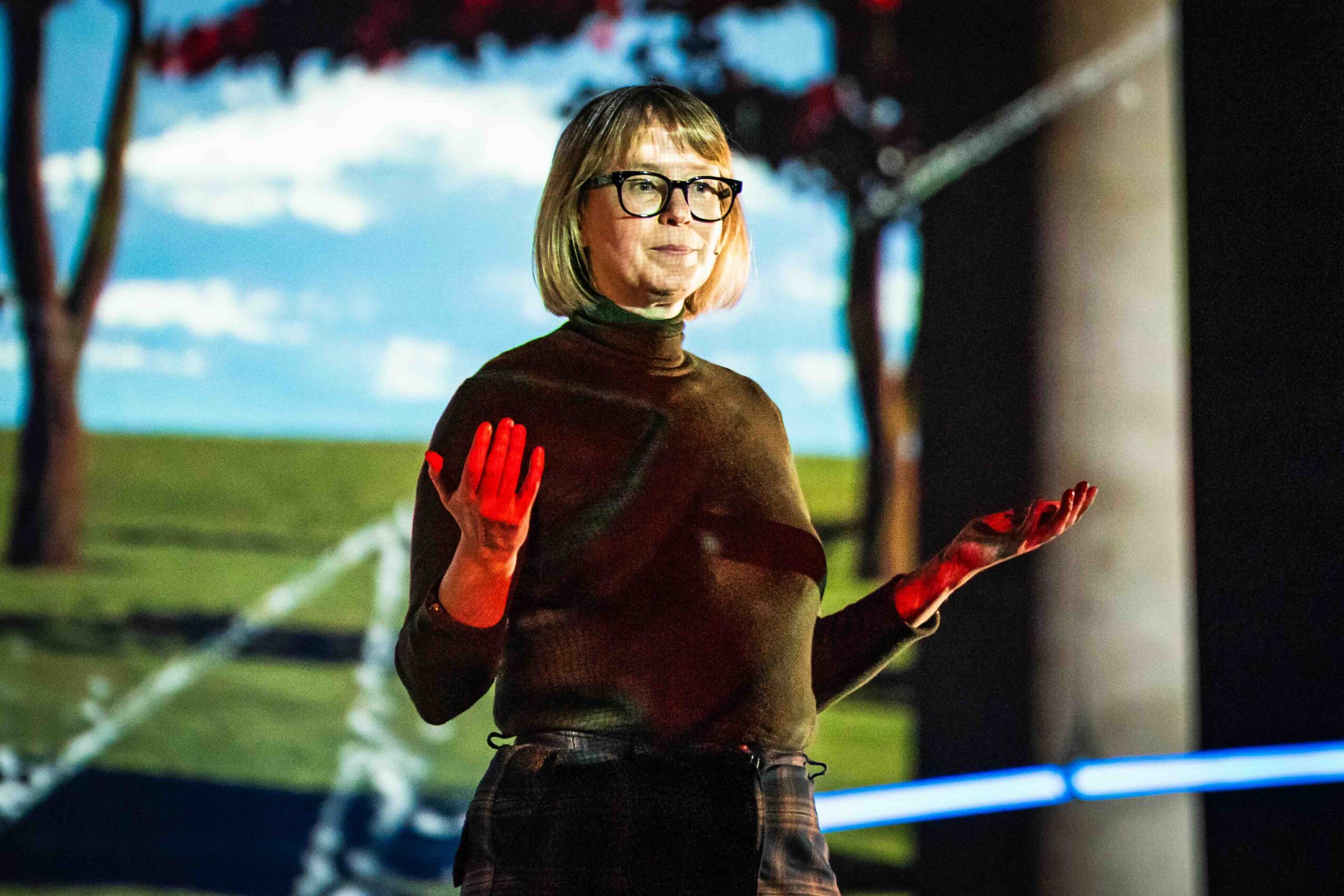
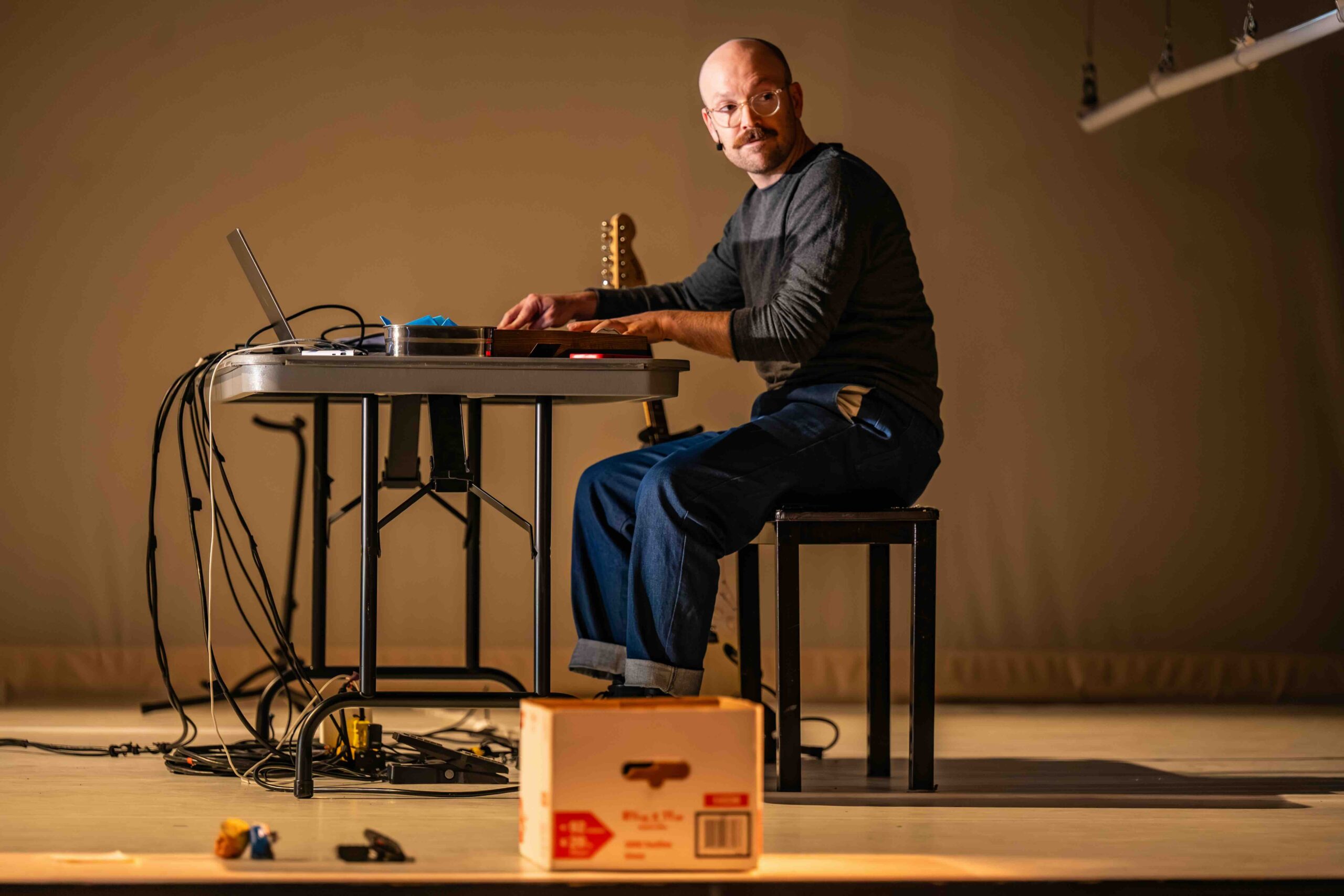
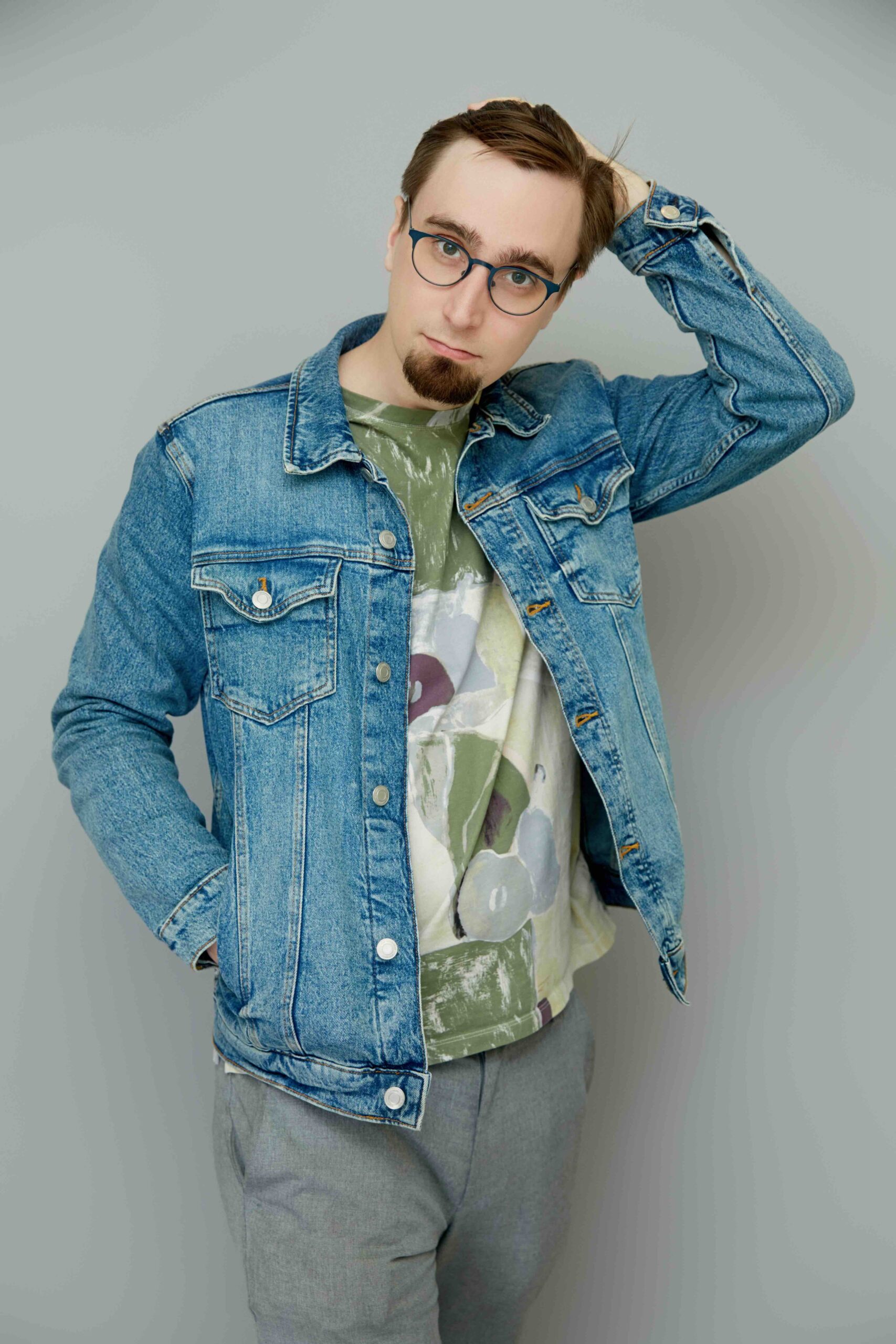
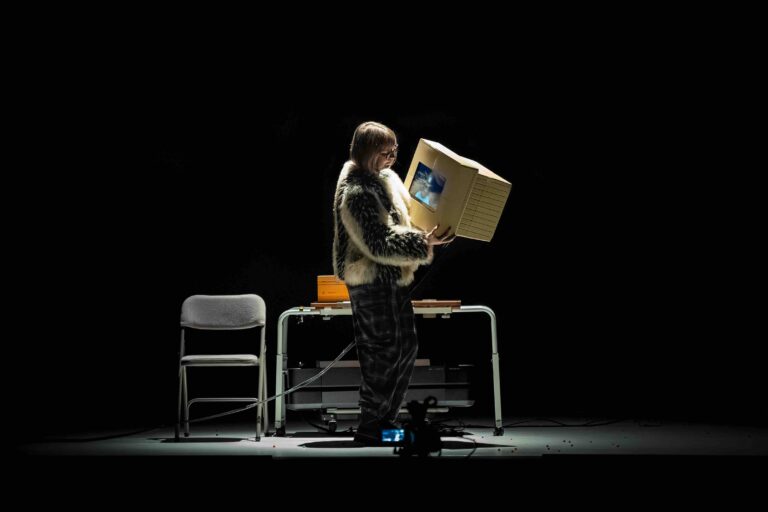
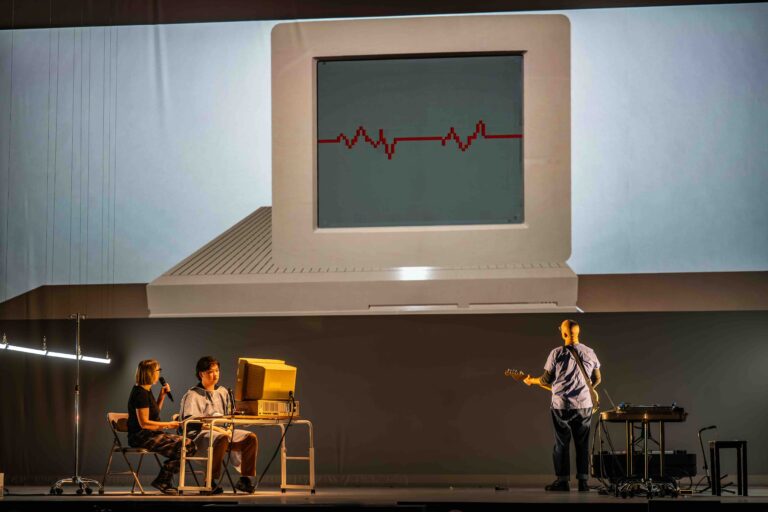
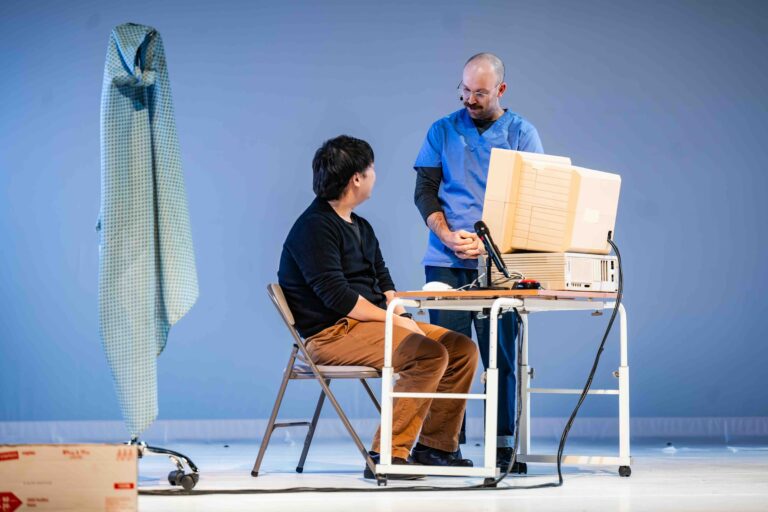
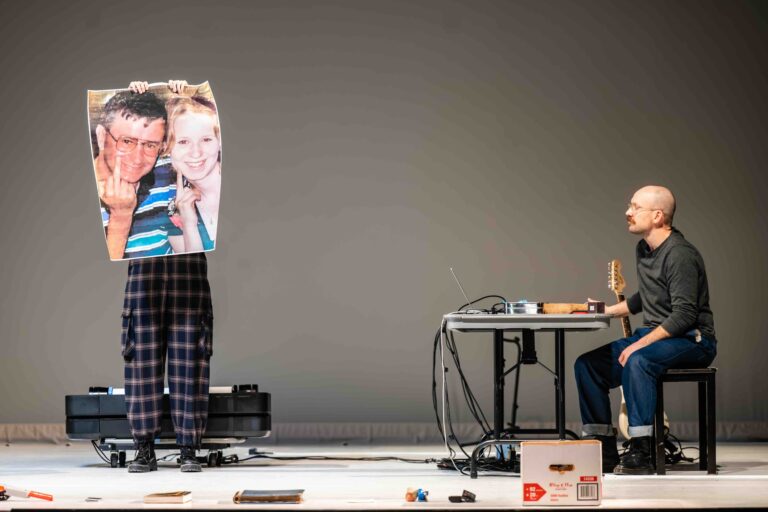



“2021 is an ode to humanity – and a hopeful look at how AI could enhance, rather than detract from, what it means to create art with other humans.”
— The Globe and Mail
“A technological visual display”
— Intermission Magazine
“A truly brilliant and unique piece of theatre.”
— Alan Dilworth, Necessary Angel Theatre